
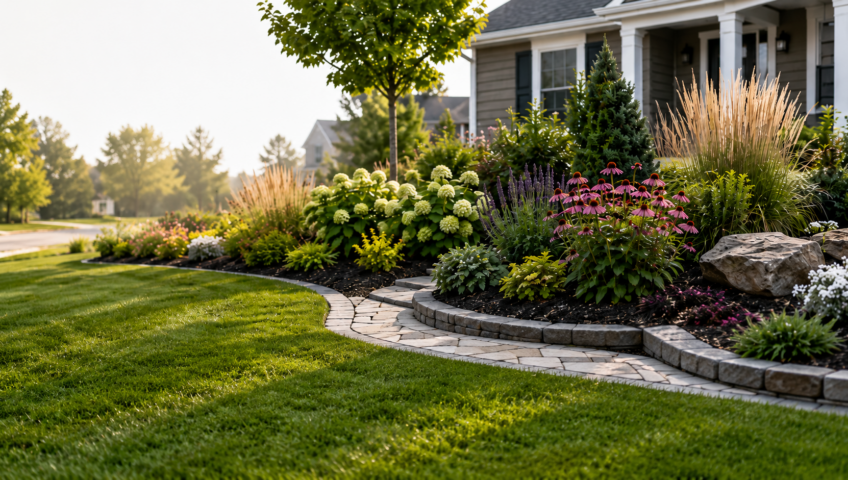
Your front yard makes the first impression when visitors come to your home. It should feel intentional, not like an afterthought.
The problem with most front yard garden advice is that it’s written for places with year-round growing seasons. Michigan gives you five solid months of warmth and a winter that tests everything you planted.
This guide covers ideas that actually work: designs that hold up, plants that don’t need babysitting, and the one detail most homeowners overlook that can make or break a front yard all summer long.
What Makes a Great Front Yard Garden?
- Year-round structure: Plants and layout that look intentional in every season, not just July. Anchor with ornamental grasses, evergreen shrubs, and defined bed edges.
- Low maintenance: Choose plants suited to your soil, light, and climate zone. The best front yard gardens don’t require constant intervention.
- Consistent watering: The most overlooked piece. Michigan summers bring dry stretches that hand-watering alone can’t keep up with. Even great plants die without reliable moisture.
Front Yard Garden Ideas by Style
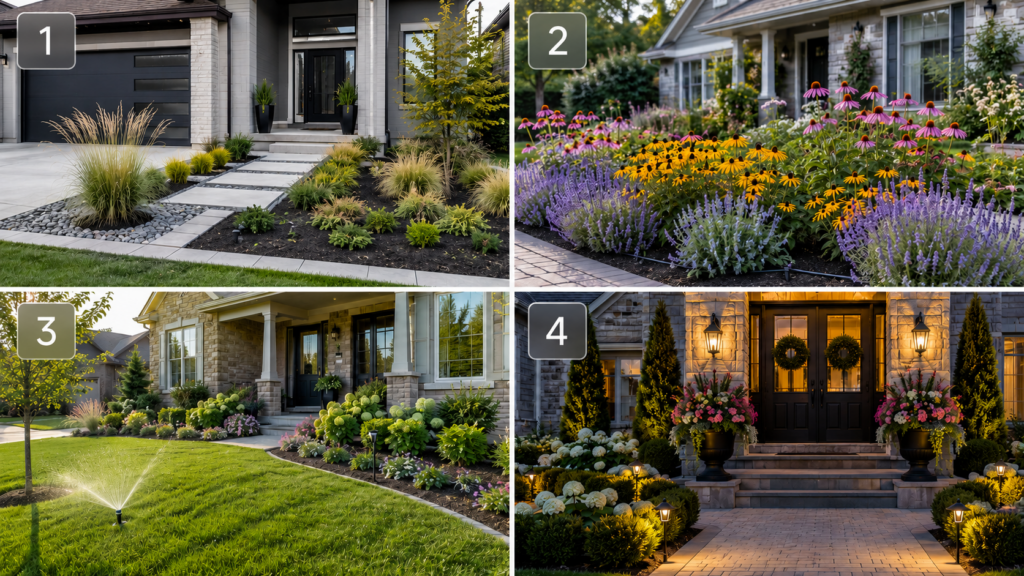
1 ) Clean and modern (minimal maintenance)
Low ornamental grass paired with ground cover and clean mulched borders. Works well in newer subdivisions across Grand Rapids, Byron Center, and Caledonia. Pairs nicely with a simple in-ground irrigation setup, only a couple of zones needed. Best for homeowners who want curb appeal without weekend yard work.
2) Cottage / English garden
Perennials layered by height: coneflower in the back, black-eyed Susan in the middle, lavender or catmint at the edges. Thrives in West Michigan’s climate. The catch is that they need consistent moisture, especially during the July and August dry spells. Drip irrigation is ideal because it delivers water straight to the root zone without wetting foliage, which lowers disease risk.
3) Landscaped lawn with garden borders
This is the classic Michigan front yard. A healthy green lawn framed by defined garden borders along the walkway and foundation. The key is a two-system approach: sprinkler zones handle the lawn, and drip lines handle the garden beds. Each area gets exactly the water it needs without overwatering one or underwatering the other.
4) Curb appeal focused (maximizing first impressions)
Symmetrical plantings flanking the front door, statement planters with seasonal color, accent lighting to carry the look into the evening. This style bridges naturally into outdoor lighting, one of the highest-return curb appeal investments you can make.
Plants That Work in Michigan Front Yards
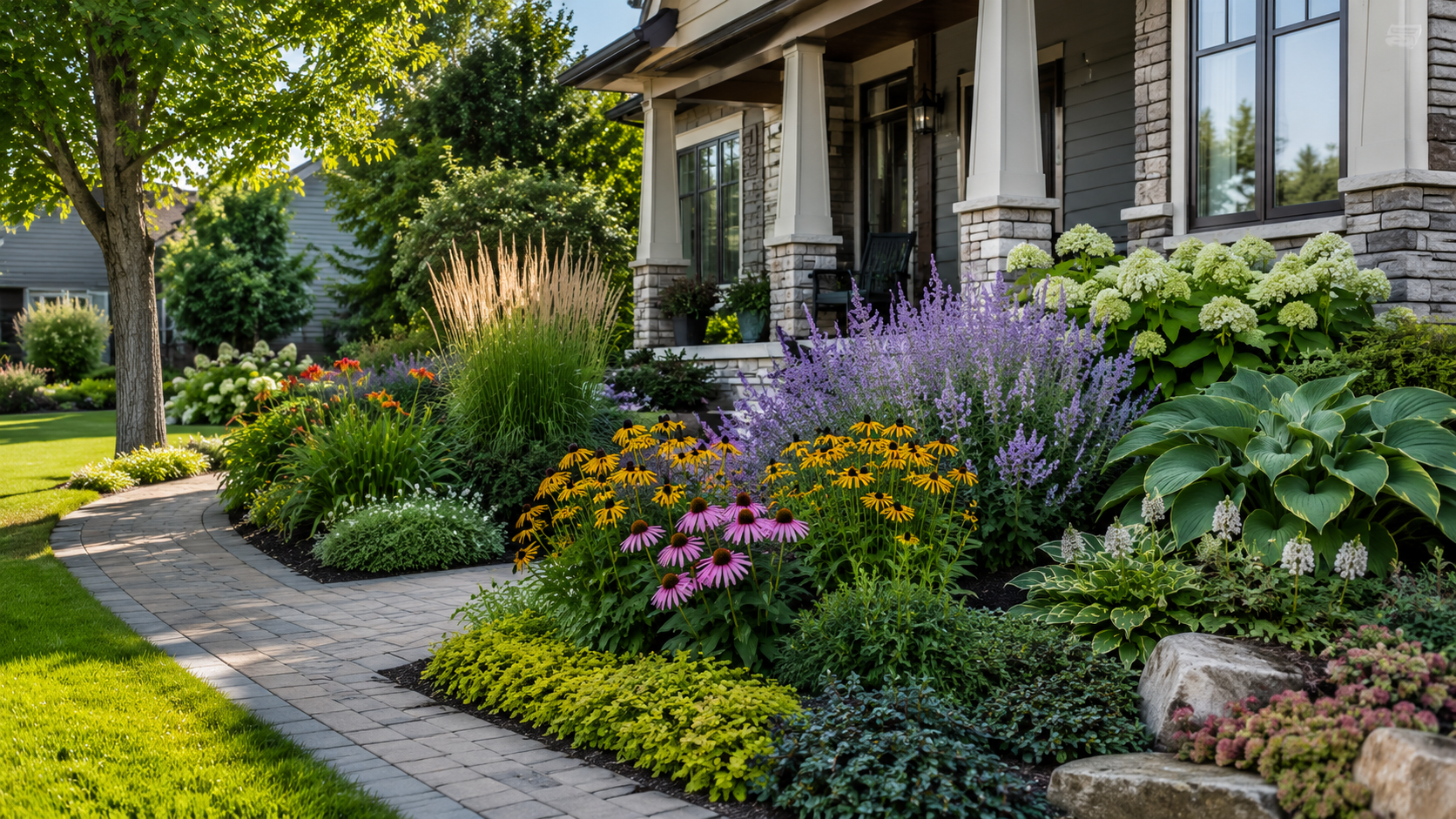
Low-maintenance perennials:
- Hostas: Shade-tolerant, reliable, and perfect for foundation beds under eaves.
- Black-eyed Susan: Drought-tolerant once established, with bright yellow blooms from July through September.
- Russian sage: Tough, deer-resistant, and adds a soft purple haze to any bed.
- Daylilies: Nearly indestructible and available in dozens of colors.
For curb appeal color:
- Hydrangeas: High visual impact, but they need consistent moisture (drip irrigation makes the difference).
- Coneflower: Native to Michigan with low water needs after the first season.
- Ornamental grasses: Architectural texture and winter interest.
Ground cover options:
- Creeping Jenny: Fast-spreading, bright green, and fills gaps quickly.
- Pachysandra: Evergreen in shaded areas with no mowing needed.
- Sedum: Rock-garden style and extremely drought-tolerant.
Note: Plant selection should always account for your specific conditions, including sun exposure, soil drainage, and proximity to sidewalks where salt damage is a factor.
The One Thing Most Front Yard Gardens are Missing
You can pick the right plants, nail the layout, and spend a weekend getting everything into the ground. But if you don’t solve the watering problem, it starts to fall apart by mid-July.
In Michigan summers, the average rainfall in July and August often isn’t enough to sustain a healthy lawn and garden. Give it a week of heat with no rain, and the hydrangeas wilt while the lawn develops brown patches.
Manual watering doesn’t fix this. You miss days, and dragging a hose around the yard waters unevenly.
The solution:
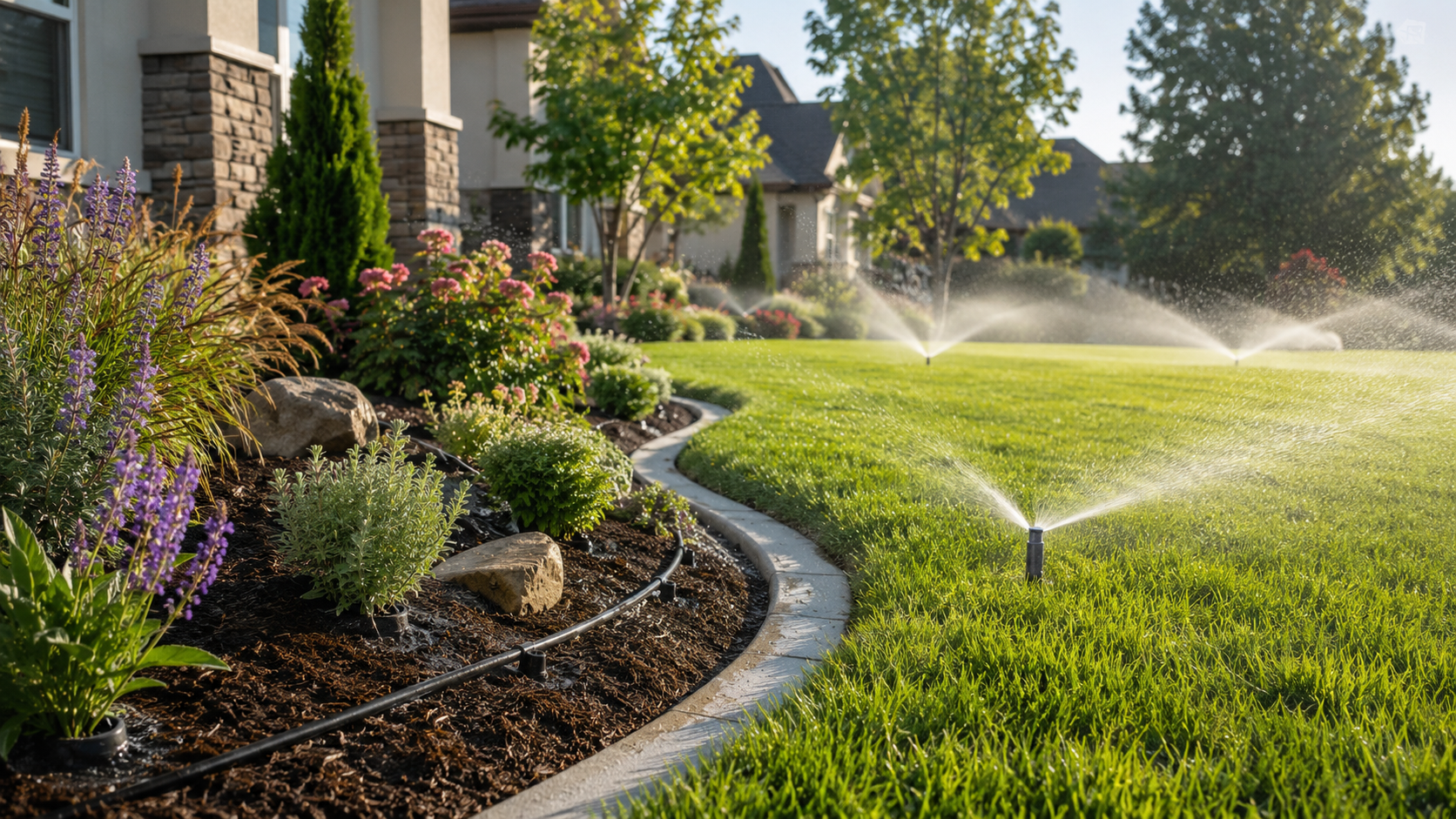
- Drip irrigation for garden beds: Low-pressure, targeted water straight to the root zone. No overwatering, no water on foliage, no waste. Set it on a timer and the beds take care of themselves.
- In-ground sprinklers for lawn areas: Scheduled for early morning, before the heat kicks in and before the night moisture that encourages fungus.
Pro tip: A properly maintained lawn needs about 1 inch of water per week. Hand watering rarely delivers this evenly across a full front yard.
Don’t Forget Drainage
Front yards with poor drainage lose plants to root rot, not drought. If water pools near your foundation or walkway after rain, fix the drainage before investing in a garden.
Signs you have a drainage problem:
- Standing water 24+ hours after rain
- Soggy spots in the lawn that never fully dry
- Erosion along walkways or the driveway edge
- Water staining on the foundation
French drains, channel drains, and regrading solve most residential drainage issues. We handle drainage alongside irrigation, so it’s the same crew, the same visit, and the trenching is already done.
How to Plan Your Front Yard Refresh
- Assess sun and shade: Walk the yard at different times of day before buying plants.
- Set a budget: Include plants, soil amendments, mulch, irrigation, and lighting.
- Sketch a layout: Even a rough drawing prevents costly mistakes.
- Choose plants for your zone: West Michigan is mostly Zone 5b to 6a, with winters that can hit -20°C.
- Install irrigation before planting: Running lines through bare soil is far easier than working around established plants.
Why Grapids Irrigation is the Best to Call For Front Yard Projects
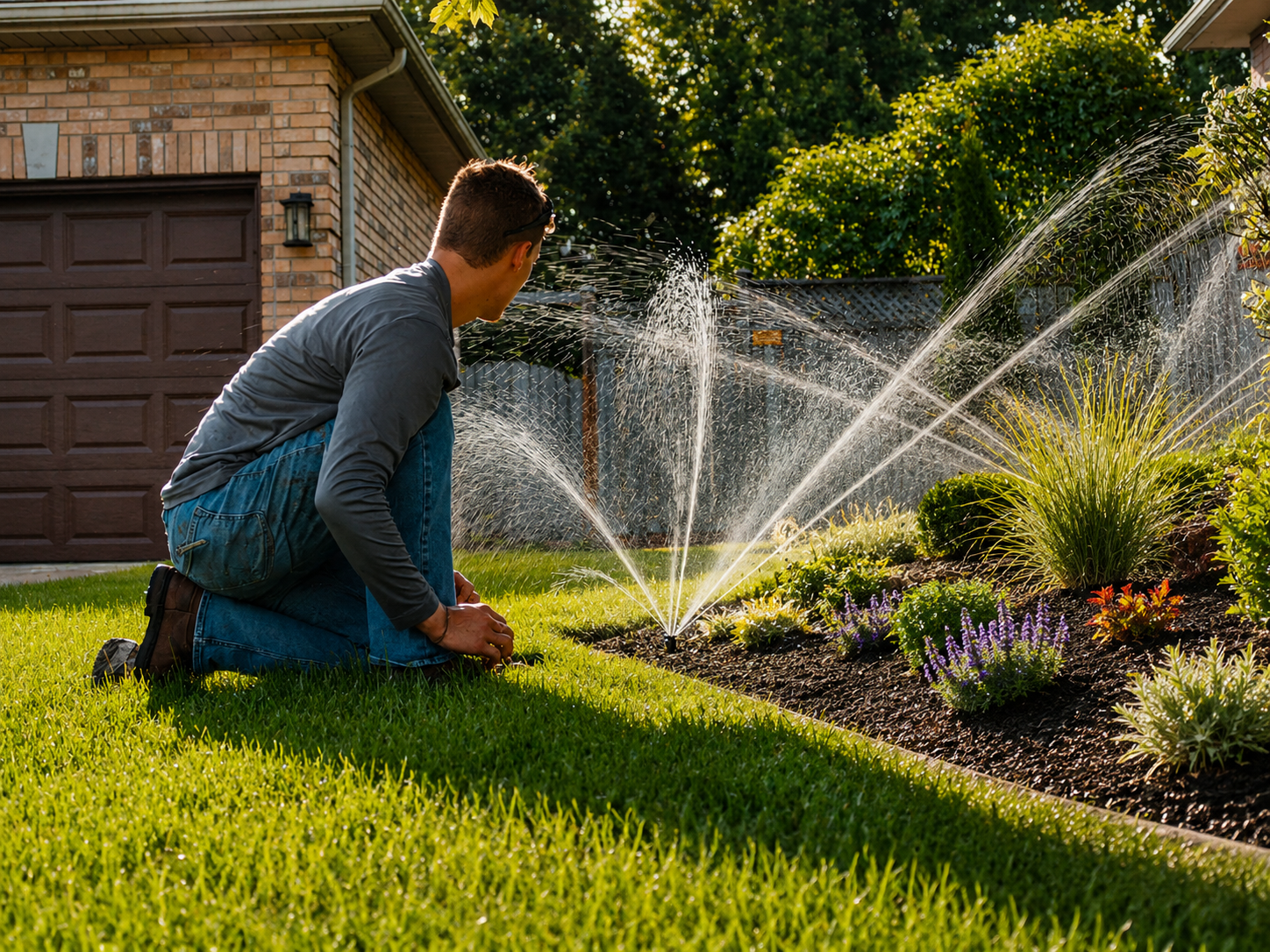
- We already know your yard: where the lines run, the grade changes, and the soil conditions.
- Shared trenching for irrigation and drip lines saves you money versus hiring a separate landscaper for watering.
- Drainage and irrigation are handled during one visit, with the same crew and the same trenching.
- Smart controllers adjust watering based on the weather, with no manual intervention needed.
- One spring startup call covers irrigation, drip systems, and lighting.
- One warranty, one contractor, one invoice.
Areas we serve
Grand Rapids, Byron Center, Caledonia, Kentwood, Wyoming, Grandville, Jenison, Hudsonville, Kalamazoo, Holland, and surrounding West Michigan communities.
Frequently Asked Questions
Q: What are the best plants for a front yard in Michigan?
A: Hostas, black-eyed Susan, daylilies, and coneflower are reliable choices for Michigan’s Zone 5b to 6a winters. For color impact, hydrangeas perform well but need consistent moisture, and drip irrigation keeps them thriving through July and August dry spells.
Q: How do I keep my front yard garden alive through a Michigan summer?
A: Consistent watering is the biggest factor. A healthy garden needs regular, even moisture that hand-watering rarely provides. Drip irrigation for beds and in-ground sprinklers for lawn areas is the most reliable approach. Set on a timer, they deliver the right amount without daily effort.
Q: How much does front yard landscaping cost?
A: Costs vary widely depending on scope. A simple garden bed refresh with plants and mulch may run $500 to $1,500. A full front yard overhaul with new beds, irrigation, and lighting can range from $5,000 to $15,000+. Installing irrigation at the same time as planting saves significantly on labor.
Q: What’s the best time to plant a front yard garden in Michigan?
A: Late May through mid-June is ideal. That’s after the frost risk has passed and before the summer heat peaks, which gives plants several weeks to establish roots before the hottest months. Install irrigation before planting so the lines are in place from day one.
Q: Should I fix drainage problems before planting a garden?
A: Yes. Poor drainage kills plants faster than drought. If water pools in your front yard after rain, address it first with French drains or regrading. We handle drainage and irrigation together during the same visit.
Ready to Make Your Front Yard the Best on the Block?
Getting the garden right is step one. Keeping it alive through a Michigan summer is step two, and that’s where irrigation makes the difference. We’ll assess your property and recommend the right system for your garden style.